My CV of Failures
By Peter Plötner · · 9 min read
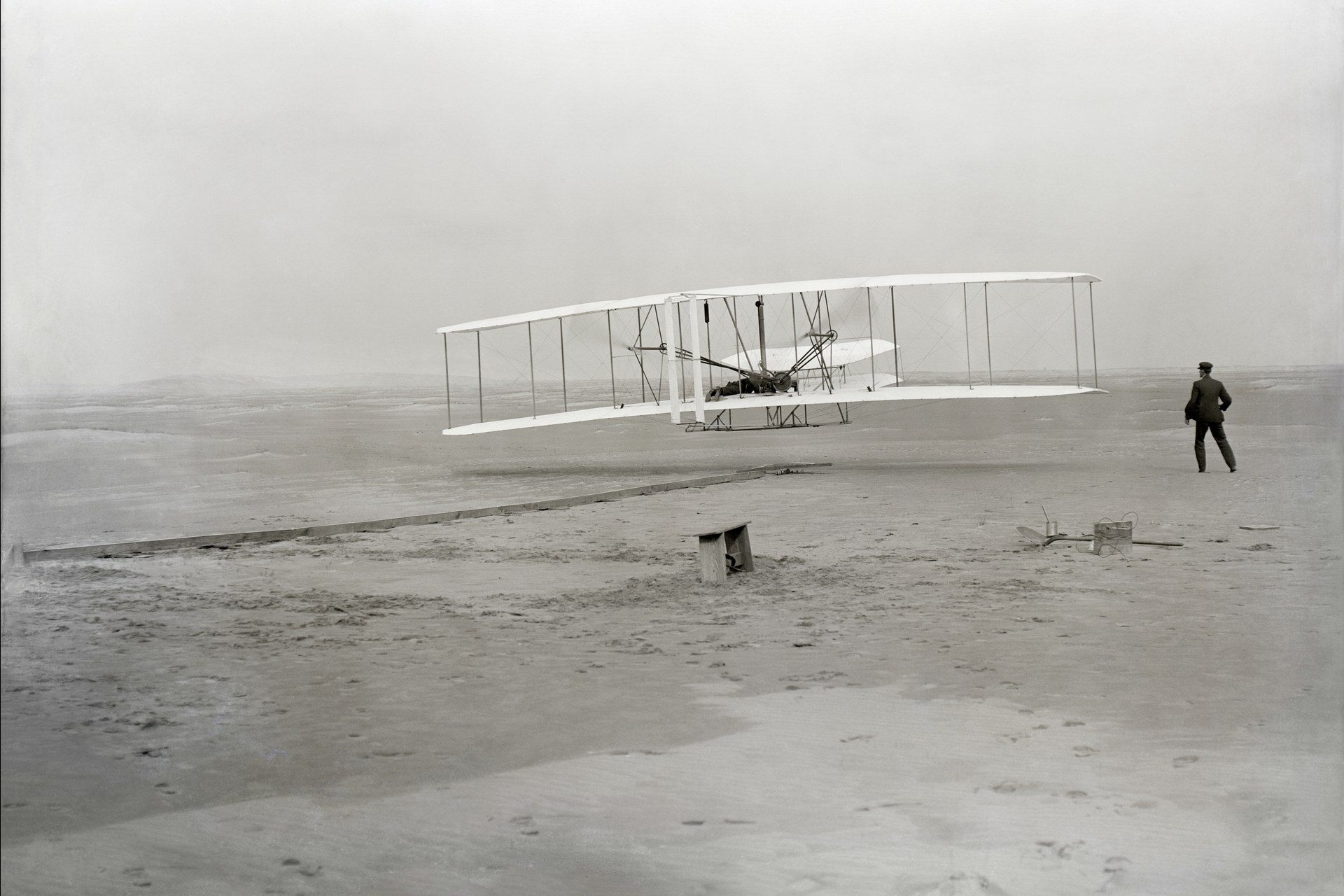
On falling down a hundred times, and learning to cheer for yourself the way a toddler's family cheers for her.
By Peter Plötner. Aerospace engineer and Wayfinder Life Coach. More about Peter →
A toddler will fall down hundreds of times before walking.
She will bonk her head on the coffee table. She will sit down hard. She will pull herself up on the couch and immediately collapse sideways. She will cry sometimes. Mostly she will just look mildly surprised and try again. For weeks. For months. Several hours a day.
Nobody around her ever stops to wonder if walking is for her. Nobody whispers to a partner that maybe she's just not the walking type. Nobody suggests she should consider a different posture-based strategy. Everyone in the room is on her side. They cheer for the wobbly two-step. They cheer for the four-step. They cheer for the slow-motion belly flop into the carpet. The whole environment is aligned with the project of her one day walking, and so eventually, of course, she walks.
I have been curious about this lately. About how few of us, as adults, get anything close to that environment, and what it would take to build it on purpose.
When you are an adult trying something hard, the room is rarely full of cheerleaders. Often it is mostly empty. You fall down in private, get up, and try again, and the world mostly does not notice. That is the interesting design problem: a toddler gets a cheering section for free, and you get to build your own.
So here is the fun part. You get to learn to celebrate it yourself. You get to be your own room.
Here, for the record, is a partial list of the times I fell down.
The list
I applied to study abroad in Canada in 11th grade. Denied.
I tried to make it to a regional volleyball league after 11th grade. I did not make it.
I applied to do civil service abroad before university. Denied.
I applied for a Freiwilliges Soziales Jahr, a voluntary social year, as a volleyball coach. Denied.
I applied to study abroad in Australia during university. Denied.
I applied for two internships in the US during my studies. Both denied.
I applied to internships at McKinsey and Bain & Company. Denied.
I applied for PhD positions at Stanford, Harvard, and Johns Hopkins. All three denied.
I applied to volunteer on multiple projects in Africa. Declined.
I only published a handful of scientific papers, and out of those, two or three came back outright rejected. The ones that eventually made it through went through long, challenging rounds of rework first.
I failed at the JLPT N3 during my PhD in Japan.
I applied to several different positions in Antarctica over the years. All denied.
I started a company building financial visualizations. It failed.
I started a second company, building a search engine for NGOs trying to find funding. It also failed. Inside that one, several funding applications I put together for the company itself went nowhere. I had partnered with five people on it, and two of those partnerships were a serious mistake.
I assumed that after writing my diploma thesis as an independent researcher at NASA's Johnson Space Center, volunteering in Honduras, and finishing a PhD at the University of Tokyo (top 30 in the world), finding a job would be easy. It took roughly 40 applications and six months. Google said no. Most of the robotics companies said no. Several medical tech companies said no. The ones who said yes did so at the very end of a much longer process than I had imagined.
I started projects on visually summarizing books. Abandoned.
I started projects on automating bureaucratic document handling. Abandoned.
In 2021, I applied for the European Space Agency's astronaut selection. I made it through the first round of tests. I was invited back to the assessment center. Then I was declined. Out of more than 22,000 applicants, ESA picked five career astronauts and a small reserve. I was not among them.
In 2023, I did another round of job applications. Roughly ten of them. I did not hear back from most. The rest declined.
And underneath every failure of action above, the most interesting one of all. For 35 years, I believed that communication, empathy, and interpersonal skills were a fixed part of who I am. Several astronauts had told me, kindly, that the personality piece either matches or it doesn't, and there isn't much you can do about it. That seemed obviously true to me at the time. So I did not work on it. For three and a half decades, the most important hemisphere of my life sat untrained, because I had been told it could not be trained. The wild part is what happened once I finally tested that.
What I notice now
A few things look different from this side of the list.
The first thing I notice is that almost every door I value in my life today opened only after a long row of doors that did not. The job I love came after 40 noes. The marriage I love came after a long string of relationships I now think of as the SpaceX approach to intimacy: each one taught me one specific thing about myself and how I show up, in roughly the way a failed prototype teaches you exactly which part to improve for the next time. Some of those rounds I handled clumsily. But I learned from each of them, and I am, I hope, a better partner now because of what each of those endings showed me.
The PhD came after Stanford and Harvard and Johns Hopkins said no. The languages I now use every day (French at work in French Guiana, Japanese well enough to survive a Tokyo grocery store, Spanish well enough to have lived in Honduras, English well enough to write my dissertation in it) all came after a school career where I barely passed grammar and spelling in any of them.
When I was a teenager, my report cards would have told you, with confidence, that I was not a languages person. I am writing this in my fourth working language. The teenagers' report card was wrong. Not because I am special. Because the report card was measuring willingness to study French verb conjugations on a Tuesday afternoon, when what actually predicts whether you learn a language is whether you will need it to live somewhere, talk to someone you love, or build a life.
I learned French because I moved to Toulouse for half a year and had to live with people who only spoke French. Suddenly, French was not a school subject. French was dinner. French was friendship. The same subject I had hated for years became, almost overnight, the most important skill in my life. I was probably slower to pick it up than the average person. It did not matter. I had a reason.
This is what I missed for most of my early career. The thing that determines whether you learn something is rarely talent. It is whether the thing has a real purpose in your life. Whether it has graduated from “would be nice” to “this is the priority.”
The second thing I notice is that the real cost of all those failures was not the failures themselves. It was the stretch after, the moment I let one no quietly rewrite how I saw myself. I am not a person who studies abroad. I am not a person Stanford accepts. I am not a person who builds successful companies. Each of those sentences quietly closed a door inside me, well after the actual rejection had stopped mattering. The good news is that this is the cheapest part to fix, once you can spot it.
The toddler does not do this. She does not, after the seventh fall of the morning, sit down and conclude that she is not a walking person. She just gets up. The conclusion-drawing function isn't online yet. That turns out to be a feature.
The third thing I notice, and this is the one I keep turning over, is that the most important failure on the list was not any of the rejections. It was the 35 years of not even applying.
For three and a half decades, I did not try to develop my emotional and interpersonal skills, because I had absorbed a story that those things were fixed. Nobody was lying to me. The astronauts who told me this were sharing what they genuinely believed, and they were sharing it with care. The story was wrong, but it wasn't malicious.
The cost was real. For a while I was a less present partner and a less articulate friend, and I often could not name what was happening inside me. Here is the part I find genuinely fascinating: this was a training gap, not a fixed fact, and training gaps close. I had built the analytical hemisphere of my life into something publishable and rocket-grade, and the relational hemisphere was simply waiting, still at the level of a thoughtful but emotionally inarticulate teenager, for me to start.
When I finally started training the other hemisphere, somewhere around 35, the gains came in fast. Slowly at first, then less slowly. Within a few years, my wife was teasing me about how different I was. Within a few more, I had retrained as a coach. The skills were not fixed. They were just untrained. The instrument had been there the whole time.
That is the failure I think about now. Not Stanford. Not McKinsey. Not the startups. Not even ESA. The most expensive item on the list was not on the list. It was the thing I never tried, because someone told me it could not be trained and I took their word for it. Turns out it could.
If you are thirty-something, or forty-something, or fifty-something, and you have been quietly accepting a story about yourself that says I am just not a person who X, please consider that the people who told you may have been generous, sincere, and wrong.
How to be your own room
As an adult, you will not get the kind of universally aligned cheering section that a toddler has. The world will not stop to celebrate your wobbly two-step. So here is the more interesting question, and what I have slowly learned about it: how do you do for yourself what the toddler's family does for her, without having to ask?
Treat each rejection as data, not as verdict
The toddler's nervous system treats a fall as information about balance. Yours can learn to treat a no as information about fit. This door, today, did not open. Noted. What did I learn about the door? About me? What is the next attempt?
Notice when you are starting to draw conclusions
The dangerous moment isn't the rejection. It is the silent sentence that follows it, the one that quietly rewrites your self-concept. I am not a person who... That sentence is almost never accurate. It is just available.
Let purpose pull you, not pressure
I learned French because I needed it to live with the people I lived with. I learned engineering because I needed to build things I cared about. I learned about emotions, eventually, because I could no longer stand to be a stranger to my own, and because I wanted to be the kind of father I thought a good father looked like. None of these came from willpower. All of them came from a real reason that was already pulling me forward.
Find one person who will cheer for the wobbly two-step
You don't need a crowd. A toddler doesn't really need a crowd either, when you watch carefully. She mostly needs one or two people whose faces light up when she gets up again. A spouse. A friend. A coach. A peer. Someone whose presence makes the failure cost a little less and the next attempt a little more likely. If you don't have one of those people right now, find one.
Write your own list
And finally, write your own list. You don't have to publish it. Most people shouldn't. But sit down and write the things you tried that did not work. The applications. The relationships. The projects. The personal goals that didn't pan out. Sit with the list for a while.
You will probably be surprised how long it is. You will probably also be surprised how many of the things you value most in your life today are downstream of things on that list.
The walking, eventually, comes from the falling. There isn't a way around the falling. There is only a way to get up that doesn't cost you the next attempt.
Most of the people you admire are doing exactly this, just out of sight. Their list is longer than the one they show you. Yours can be too.
Looking at my own list now, what surprises me isn't regret. It is the opposite. I cannot do everything. But I can do anything. The list is the proof of both.
Get up. Try the next thing.
The room is empty. Be the room.
Frequently asked questions
Why publish your failures? Isn't that just a humblebrag?
The point isn't the list. It is the gap between what someone's public CV shows and what their real path looked like. If you only see the wins of the people you admire, you will quietly conclude they are different from you. They are not. They just don't lead with the falls.
Doesn't this risk wallowing in failure?
It would, if the list were the destination. It is a tool. You write it once, you sit with it, you notice patterns (where you stopped, where you doubled down, what the no's actually taught you) and then you put it away. The next attempt is always the point.
What about failures that really were the wrong path?
Some of mine were. Two business partnerships that turned out to be the wrong fit. A handful of projects that I now see were someone else's requirement, not mine. Those are real, and they belong on the list too. The lesson is just a different one. Not “try again at the same thing” but “notice the shape of the mistake so you build something better next time.”
I'm too old to start over. Isn't that just true?
I started training emotional and relational skills at 35 after thirty-five years of believing they were fixed. Within a few years I had become a coach. The instrument had been there the whole time. Nobody is too old. Some of us have just absorbed a wrong story about which parts of ourselves are still trainable.
How do I start writing my own list?
Pen and paper, one sitting. Don't curate. Don't rank. Just write the times you tried something and it didn't work. Applications. Relationships. Projects. Personal goals. Don't share it. The point is to see your own path with the wins removed, the way the world only usually sees you with the wins included.
The story I had absorbed about my own emotional skills (that they were fixed) is the kind of inherited requirement I write about in Don't Build an SLS. If this hit something for you, the Spec Check is four questions that take sixty seconds. A good starting point for noticing which old stories you are ready to test against what you can actually do now.
Related essays
Your space, free
No matter where you start, it walks with you: find what you really want, and be at peace and in joy on the way. Your unfair advantage.
Make my free account