Delete Where It Hurts
By Peter Plötner · · 7 min read
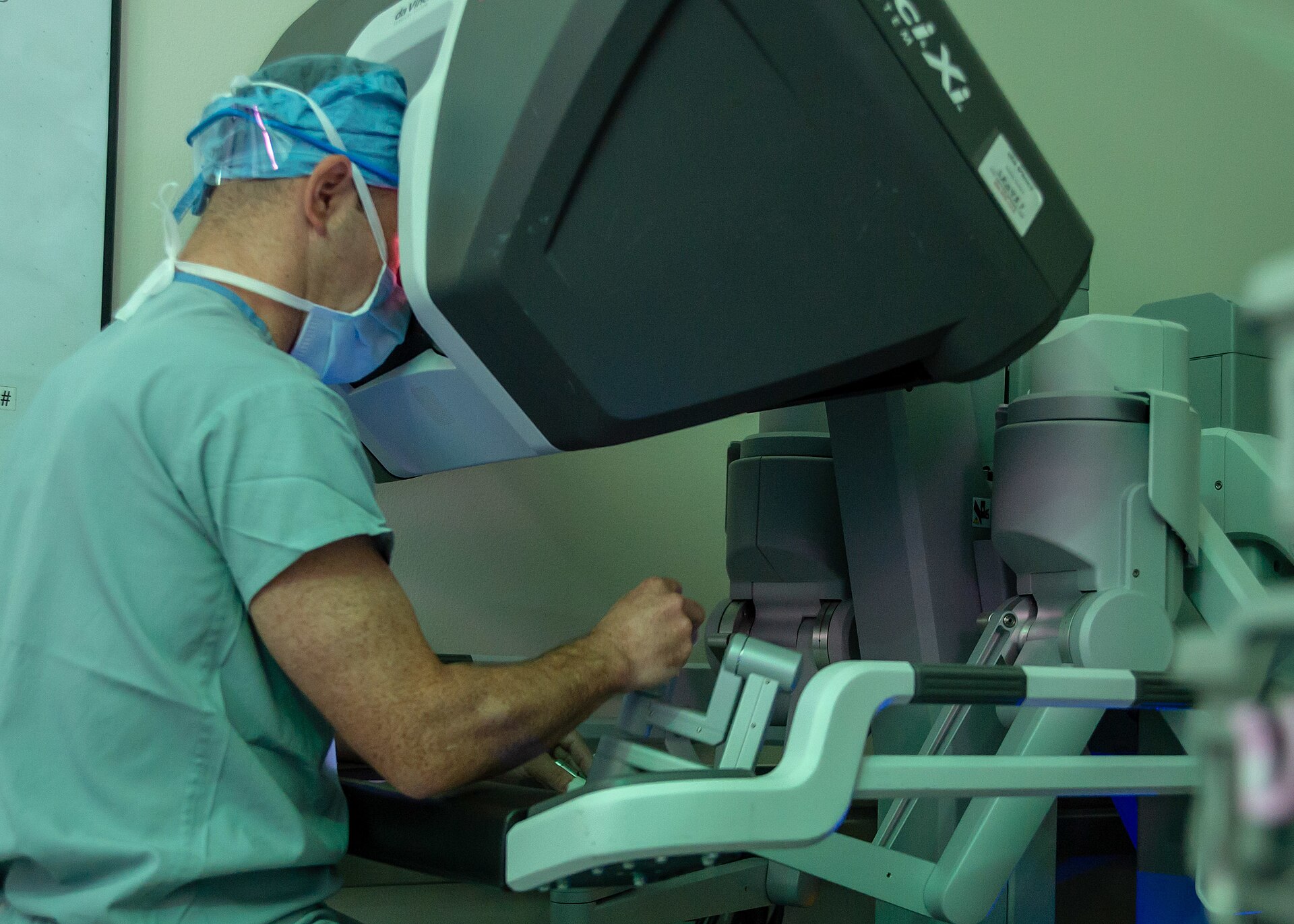
For technical founders and senior leaders simplifying the wrong things: how surgical robots got better by deleting parts, but only the parts that touched the patient.
By Peter Plötner. Aerospace engineer and Wayfinder Life Coach. More about Peter →
In 1999, the best surgical robot in the world, the da Vinci, needed four arms working through four holes in a patient. Today its newest version needs one hole, two and a half centimeters wide. What happened in between is not a story about adding technology. It is a story about deleting it, and about being very careful where you delete.
I spent my PhD years inside this exact idea, in a lab at the University of Tokyo, before I understood what it was teaching me.
Steering robots through blood
My research was about steering microrobots through blood vessels. Not with wires or motors. The robot was a tiny magnetic cylinder, small enough to travel where no catheter goes, and we steered it from outside the body with electromagnetic fields. Done right, this could one day carry a tool or a drug deep into vessels that surgery cannot reach.
The standard design for the field generator was brute force: surround the patient with electromagnetic coils. Twelve coils, arranged in pairs around the body, each pair adding control authority. More coils, more control. That was the logic, and on paper it worked.
Then we did the actual calculation, and the paper fought back. The patient has to fit inside the innermost pair. Every following pair has to fit around the pair before it. So each coil grows, and grows, and by the outer pairs you are drawing machines that are giant, absurdly heavy, and hungry for power. The full twelve-coil cage was never built in our lab, and as far as I know nowhere else. It could only exist as a paper design, and the paper was already telling us no.
Ten of twelve, deleted on paper
So we deleted. Of the twelve coils the standard approach called for, we removed ten, before a single one was wound.
Everything in you resists a move like that. Ten of twelve is not trimming, it feels like surrendering most of your control on purpose. But the arithmetic on the other side was hard to argue with. Two coils meant room for the patient. Two coils could be designed fresh, for a strong magnetic field gradient at a long distance, so they could do their work from far away instead of pressing in close.
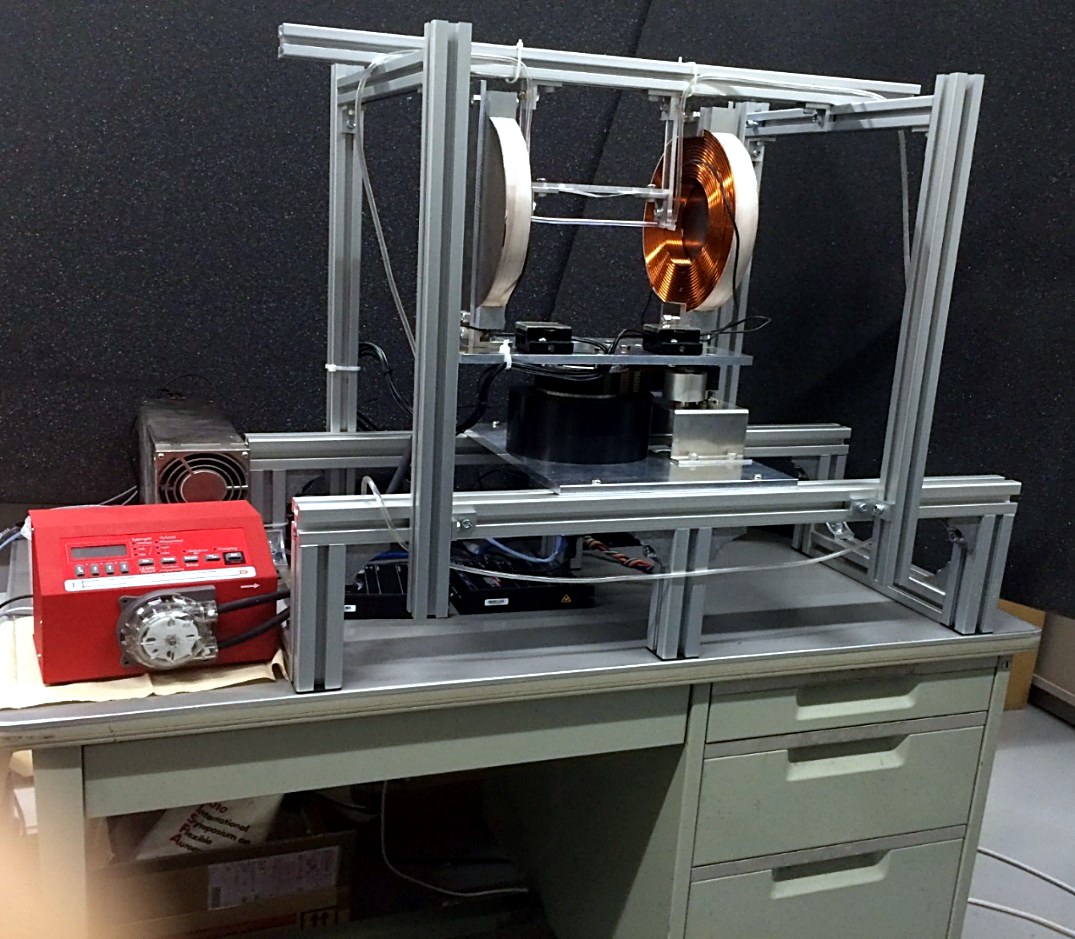
There was a catch, and it is the honest part of the story. To aim two coils as flexibly as twelve fixed ones, we mounted them on two industrial robot arms. So the system did not simply get smaller. Complexity left one place and appeared in another. But look at where it went. The arms lived away from the patient, built on decades of industrial reliability, easy to position, easy to service. The complexity moved from the boundary where it hurt, right next to a human body, to a place where it was cheap and safe. And the arms made the workspace giant.
The cheapest part to delete is the one you have not built yet. We deleted at the drawing stage, and it was the best engineering decision of the whole project.
Two months against a wall
It was after that decision, while building the experimental setup around the newly designed magnets, that the project nearly ended me anyway. The equipment arrived, and for two months I could not make the computer talk to the controller. Two months. One person, one interface, no error message that meant anything. I searched the internet for every scrap anyone had ever written about that controller. The lab was me, one master's student, sometimes a visiting student, up against labs where whole teams worked the same topic.
What finally saved me was a stranger. A random guy on the internet who had once connected one of these controllers himself, and took the time to walk a person he had never met through it. Two months of my life, arguably the whole PhD, rescued by someone with no reason to help beyond being the kind of person who does.
And here is the part that still makes me smile, and wince. The controller was arguably too complex for what I needed. An older model with a simpler protocol would have driven the setup just as well, as far as I can tell, with no cost to the experiment at all. I had deleted ten of twelve coils at the drawing stage, the best decision of the whole project, and then lost two of the hardest months of my life to a part I never asked the same question about. The deletion worked exactly where I ran it. It could not protect me from the parts I never questioned. When you are a team of two, every part you own is a part that owns you back, and the ones that grip hardest are the ones you never chose on purpose.
The robot that ate its own arms
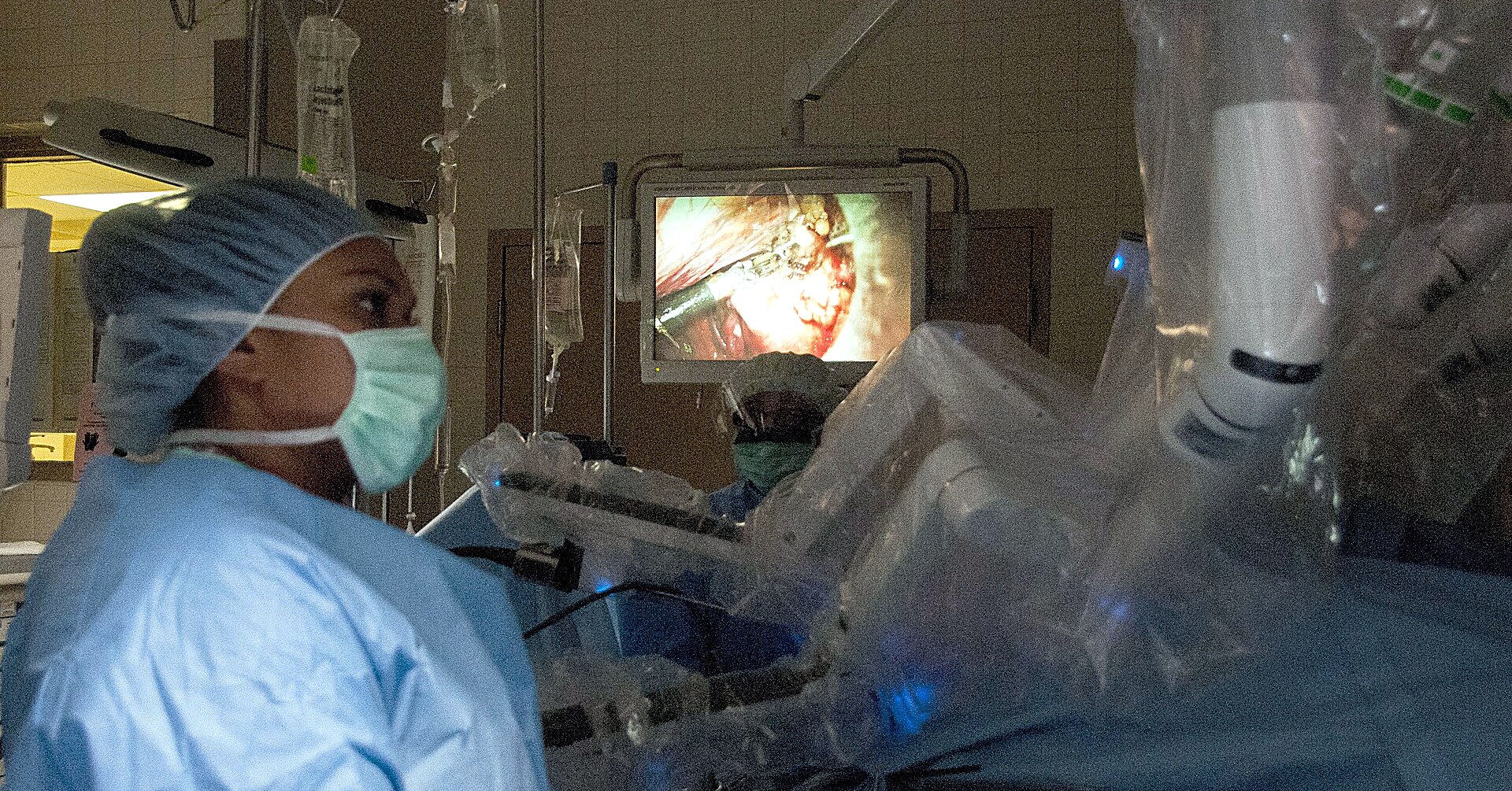
The da Vinci walked the same road at full scale. Its Xi generation, released in 2014, made every arm identical, so any instrument or camera fits any arm. A deletion of special-purposeness that measurably cut arm collisions and docking time. The SP version, cleared in 2018, went further and deleted three of the four arms entirely. One arm, one small port, three wristed instruments and a camera down a single shaft, able to reach all four quadrants of the abdomen through that same hole, without stopping the operation to reposition the robot or cut new access. An entire class of failure, robot arms colliding above an open patient, removed by removing the parts that collided.
The same honest catch applies here too. The instruments themselves became more complex, each carrying its own wrist and elbow, and the computing power grew enormously. The engineers did not make everything simpler. They deleted at the boundary where failure is expensive, holes in a person, arms that crash, interruptions in an operation, and let the necessary complexity live where slack is cheap: in software, inside instrument joints, away from the patient. For its first twenty-five years that machine was also missing something you would never guess, but that is its own story.
Delete where it hurts
Here is the part that took me years to carry out of the lab. Deletion is not a diet. The point was never to have less of everything. Every system has a boundary where failure is expensive and space is precious, and that is where the parts have to go.
Your life has that boundary too. It is wherever damage does not undo: your health, your marriage, your children, the one or two relationships and decisions everything else depends on. And most of us do what the twelve-coil design did. We crowd that boundary with parts, commitments, screens, obligations, one more reasonable thing, each adding a little control on paper and taking space from the person the whole system exists to serve. Meanwhile we go minimal in cheap corners, because tidying there feels like progress and touching the expensive boundary feels like giving up control.
The engineering answer is the opposite. Delete where it hurts. Keep the complexity, if you truly need it, where failure is survivable and slack is cheap. I deleted ten of twelve coils and gained a workspace. The surgeons' robot deleted three of four arms and gained a patient who heals in days. The question was not how much to remove. It was where.
Try this week
Find your expensive boundary first. Not your messiest area, your most expensive one: the place where failure does not undo. For most of the technical founders and leaders I work with it is health, the closest one or two relationships, or the single decision their company cannot survive getting wrong.
List what is crowding it, each part reasonable on its own. Then pick one, and delete it this week. Not trim, not reschedule. Delete, the way we deleted on paper, before the cost gets built in. If something must be added to cover the gap, add it where failure is cheap: a system, a standing rule, someone whose job it is.
What is crowding the most expensive boundary in your life right now?
Frequently asked questions
What does “delete where it hurts” mean?
Every system has one boundary where failure is expensive and space is precious. In surgery it is the patient's body. In a life it is health and the few relationships and decisions that everything else depends on. Deletion pays off most exactly there, at the expensive boundary, not in the cheap corners where tidying merely feels like progress.
How did the da Vinci get from four arms to one port?
In steps, each one a deletion. The 2014 Xi generation made all four arms identical, so any instrument fits any arm, which cut arm collisions and docking time. The 2018 SP version removed three of the four arms: one arm, one 2.5 cm port, three wristed instruments and a camera down a single shaft, reaching all four quadrants without repositioning. The instruments grew more complex inside, but the complexity moved away from the patient.
Isn't this just minimalism again?
No. Minimalism wants less everywhere. This wants the parts in the right places. The microrobot system did not shrink when we deleted ten coils, it gained two industrial robot arms. Total complexity stayed, but it moved from the boundary where failure hurts to a place where failure is survivable and service is easy. The target is placement, not count.
What if I cannot delete anything at my expensive boundary?
Then move complexity instead of multiplying it. The rule from the coil system: whatever must exist to cover the gap gets added where failure is cheap, a system, a standing rule, a person whose job it is, never one more part pressing on the boundary itself. And check the add-back later. If it did not earn its place, it goes too.
What is the lesson of the controller story?
That the deletion question has to be run on every part, not just the dramatic ones. I questioned the coils and won big. I never questioned the controller, accepted its default complexity, and lost two months to it when a simpler model would have done the job. The parts that grip you hardest are the ones you never chose on purpose.
The deletion step of the engineering framework starts in The Best Part Is No Part, and the idea that slack and interfaces decide where complexity belongs runs through Integration Multiplies Opportunities and Problems. If you want a place to start, the Spec Check is four questions that take about sixty seconds, a quick read on which parts of your life are still carrying their weight. The microrobot research in this essay is published; the paper is linked from the about page.
Related essays
Your space, free
No matter where you start, it walks with you: find what you really want, and be at peace and in joy on the way. Your unfair advantage.
Make my free account