The Work Nobody Films
By Peter Plötner · · 4 min read
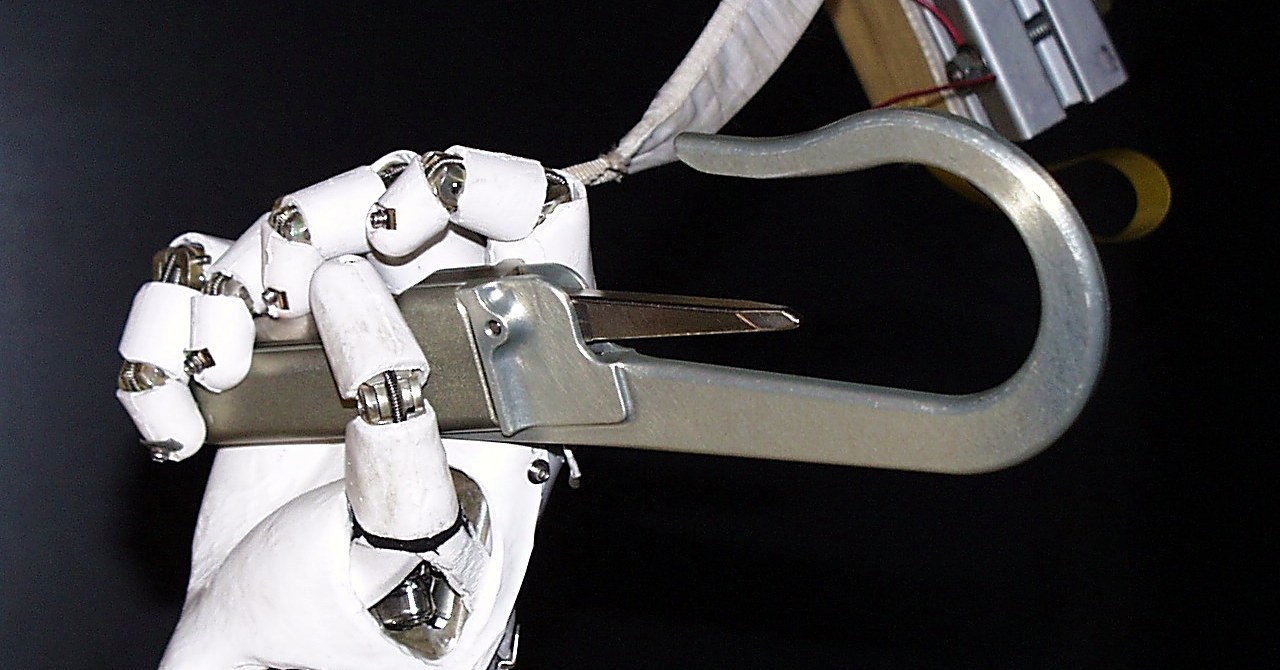
The demo goes viral in fifteen seconds. The work that made it real, in a robot or in you, is invisible on purpose.
By Peter Plötner. Aerospace engineer and Wayfinder Life Coach. More about Peter →
1X's new robot hand took fifteen seconds to impress you and millions of test cycles you will never see to actually work.
1X showed off its new humanoid hand in early July. The clips are lovely. It zips a jacket. It plugs in a USB-C. It signs a word. What the clips leave out is a small number sitting in the spec sheet: the hand was validated across millions of cycles. Millions. That is the part that made it real, and it is the part almost no one will ever watch, except the people who did it.
The demo is for you. The hand is for the customer.
Those are two different audiences, and they want two different things.
The feed wants to be impressed, and fifteen seconds is plenty for that. If you have shipped anything real, you already know the demo is the easy part. The customer does not care that the hand zipped a jacket once on a livestream. The customer cares whether it still works after ten thousand grips, in a warm room, when a box sits five millimeters off from where it should be. Repeatability. Flexibility. Maintainability. Those words never trend. They are also the entire product.
1X is not building for the news cycle. Neither is Figure, which ran a livestream for a full week, not to show a trick but to show the least exciting thing an engineer can show: it keeps working. Tesla and Apptronik are chasing the same boring prize. The headline is the fifteen seconds. The company is the millions of cycles.
Your work has the same shape
I have watched this from the inside, on the Ariane 6 launch crew. A rocket like that reaches orbit, flight after flight, and from the outside it looks clean, almost easy. What you never see is that every person who made it happen was also carrying a whole life while they did it. A hard week at home. A parent getting sick. A worry they mentioned to no one. The launch is flawless on the screen. The people behind it were running their own invisible cycles the entire time.
Your work has that same shape. What people see is the launch, the funding round, the day it finally shipped. What it actually took was the part no one reports, done by someone who was also just trying to get through their week.
So you do a strange thing. You compare your own thousands of quiet reps to everyone else's fifteen-second clip. You hold your grind up against their highlight. And the comparison is rigged, because they are not showing you their millions of cycles. Nobody is.
Eighty percent is not a product
Here is the part that is easy to miss.
In engineering, a system that works 80 percent of the time is not a product. It is a hazard. Reliability is the whole game, and reliability is boring: the same thing, done correctly, thousands of times, especially on the bad days. That is what all those test cycles are buying.
Your growth works the same way. Learning a new way to respond is the easy part, the demo. You can do it once, on a good day, rested, when no one has pushed your buttons. The real work is doing it at 99.99 percent, across thousands of repetitions, when you are tired and scared and the old reflex is right there waiting. That is not a lack of progress. That is the progress. It just never looks like anything from the outside. Build that loop, repeat and adjust, repeat and adjust, and success stops being a lucky break. It becomes a matter of time.
There is no clip of the actual change
And your own growth is the least reportable thing of all.
The breakthrough is a story you tell afterward, tidy and easy to share. The real work was the thousand quiet reps that came before it, the ones that felt like nothing while you were inside them. That flat, nothing-is-happening feeling is not a sign you are behind. It is what the work looks like from the inside, for the robot and for you. The change is real, it is just too slow to see up close. You mostly notice it by zooming out over months, not days, because standing inside your own life every hour, you are the last one to spot it.
Frequently asked questions
What was actually new about the 1X robot hand?
Less than the clips suggest. Tactile sensing and force feedback already show up in Tesla's and Figure's demos too. The honest story is not a lone breakthrough; it is that the unglamorous work, millions of cycles for repeatability and maintainability, is what turns a demo into a product, and that work never makes the news.
Isn't a viral demo still valuable?
Yes, for attention. A demo is built for the audience; the product is built for the customer. The mistake is confusing the two, in a robotics company or in your own career.
How does this apply to a founder or leader?
You compare your own thousands of quiet reps to everyone else's highlight reel, and the people you measure yourself against are running the same unfilmed grind. The metric that matters is not whether you had a breakthrough, but whether you have built a process, repeat and learn, repeat and learn, reliable enough that success becomes a matter of time rather than luck.
What does reliability mean for personal growth?
Doing the new skill not once but nearly every time, across thousands of repetitions, including on your worst days. Learning it is the demo; applying it at 99.99 percent is the work.
Why does personal growth feel invisible?
Because there is no clip of the actual change, and because the shift is tiny from one day to the next. You are with yourself every hour, so gradual change goes unnoticed up close; you only see it by zooming out over months, not days. Feeling like nothing is happening is often what real change looks like from the inside.
If you want a clearer look at the work in yours that no one else sees, the Spec Check is a quiet place to start.
So maybe the real question is not whether you have had your breakthrough yet. Maybe it is simpler, and harder. What is the work in yours that no one will ever see? And are you judging it by whether it holds up, or by whether it would make a good clip?
Related essays
Your space, free
No matter where you start, it walks with you: find what you really want, and be at peace and in joy on the way. Your unfair advantage.
Make my free account