The Founder Who Outgrew Their Own Company
By Peter Plötner · · 7 min read
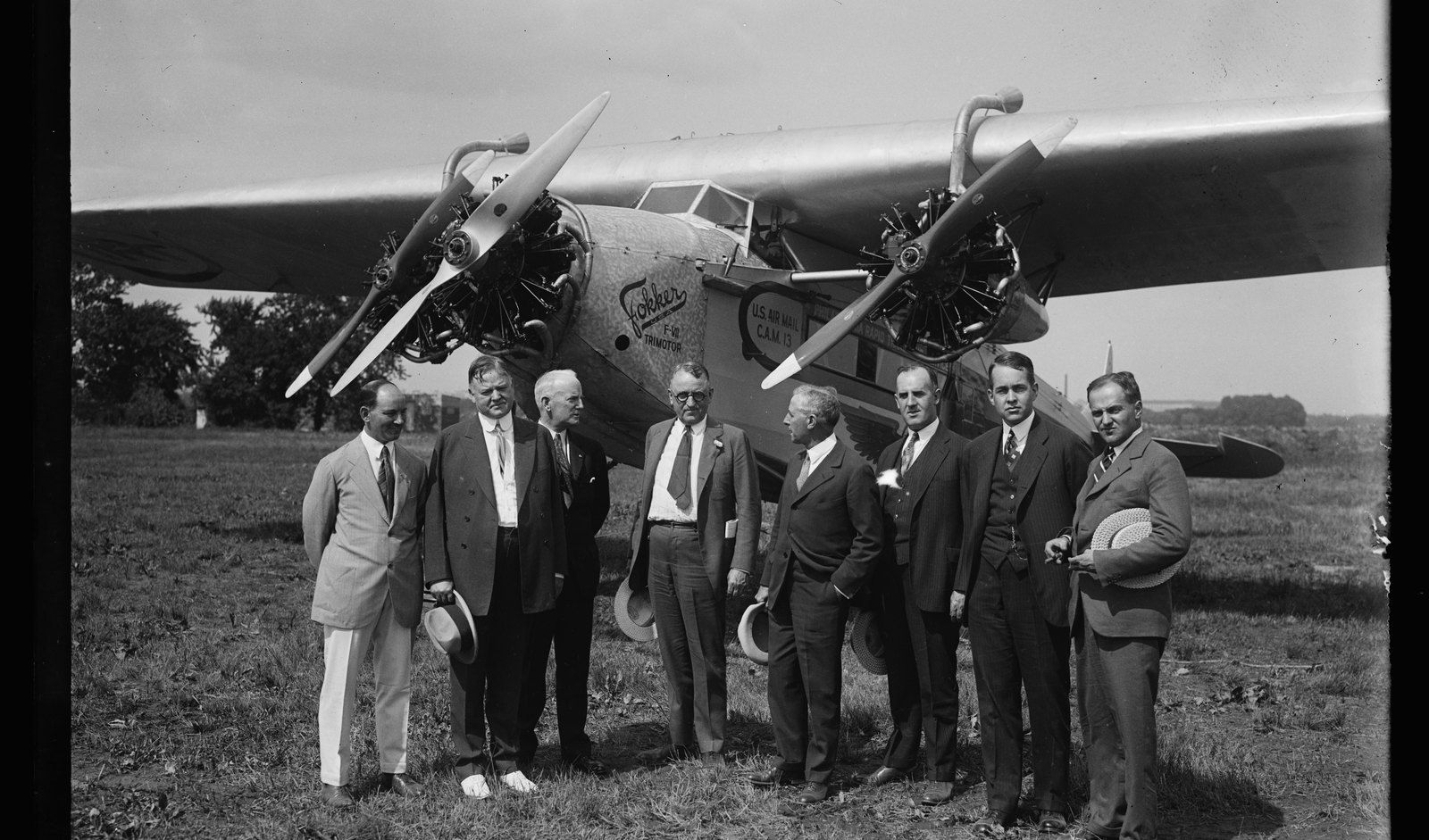
For founders and senior engineers: when the company, the role, or the product you built stops fitting, the question is not whether to quit or sell. It is which requirement was ever really yours.
By Peter Plötner. Aerospace engineer and Wayfinder Life Coach. More about Peter →
The airlines you fly today, United, American, TWA, all started out flying sacks of mail. The ones still here survived by letting the mail go.
When the thing you built stops fitting you, that same move is waiting, and most people miss it because it looks like quitting. The misfit is not a failure. It is a signal, and the signal is not “something is wrong with me.” It is “I have a requirement I never named out loud.”
I work with technical founders and senior engineers right at this moment, when the company, the role, or the product they built has quietly stopped fitting. So let me tell you the rest of the mail story, because it is really a story about requirements.
How the mail became the airlines
In 1918, the United States Post Office started flying the mail. Government pilots, government planes, open cockpits, a lot of crashes. It worked well enough that in 1925 Congress handed the job to private companies. They bid for routes and flew the mail under contract.
Here is the part worth sitting with. Those contract carriers did not stay in the mail business. The ones that lasted looked at what they were really doing, which was running aircraft as a business, and saw that the mail was only the first cargo. Passengers were the bigger one. So they followed the requirement, not the cargo. That is how United, American, and TWA grew out of sacks of letters.
Now imagine you were one of those early pilots, and the work was shifting under you. Your next move depends on one question: what was your real requirement?
If your requirement was the mail itself, you follow the mail. Wherever it goes next, onto the trains, onto the trucks, onto the ground network, you go with it.
If your requirement was flying aircraft as a business, you let the mail go and you carry people.
If your requirement was the specific feeling of flying a small plane with your own hands, you do neither. You go where small planes still matter. Backcountry flying. Teaching someone their first landing.
Same starting point. Three completely different lives. The only thing that tells them apart is which requirement was really yours.
Your company works the same way
The thing you built was never the point. It was a way of meeting a requirement, even if you never wrote that requirement down. When it stops fitting, the useful question is not “should I quit” or “should I sell.” It is the pilot's question. What was my real requirement, under all of this?
Here is one common shape of the misfit. A company grows, and if you stay in charge, your job keeps changing whether you want it to or not. You start as the doer, the one who makes the thing. Then you become the trainer, teaching other people to make it. Then you become the strategic planner, the one who sets direction and inherits every problem nobody else could solve.
That is a normal path. But notice it is three different jobs. If what you love is the doing, or the teaching, and you find your days filling up with budgets and org charts and a hundred people, the company has not failed. It has grown past the version of the work you fell in love with. That gap is information, not a verdict.
I know the feeling from the other side of engineering. I am at home with technical challenges. That is my comfort zone. Where I step out of it, and where I have the most room left to grow, is the human side of building hard things. The communication. The emotion. How teams really decide, and break, and recover. Noticing that did not pull me away from aerospace. It showed me that what I am reaching for is wider than the part I am already good at.
The asset that is on no skills list
And here is something nobody tells you when you start. When you build something, there are always more gaps than fits, because most of it is work you have never done before. My first projects taught me that the hard way. But after a few of them, including the ones that failed, something changed. The work did not get easier. I did. I learned that I could work things out, and that I would be fine even when I could not.
That is the real asset, and it is on no skills list. It is not being able to do everything. It is trusting that you can figure out whatever comes next. Good investors know this. When they back a team, they are mostly asking one quiet thing: do I believe these people will figure out whatever they need to figure out? Not “do they already know how.” “Will they work it out.”
If you have that, you lose nothing when the work changes. You just point the same trust at a new problem.
Why I won't tell you the move
Let me show you how this surfaces in a real session. A founder I worked with was weighing three new directions at once. Three different things to start. We could have built a spreadsheet and scored them. Instead I asked one question: how would it feel to do more of the thing that already works?
The answer did not come from their head. It came from their whole body. The energy that came back was unmistakable. They had been reaching for a new thing to add, when the requirement was already sitting in plain sight, in the work that lit them up.
That is why people want me to tell them the move. Step back to a technical role. Hire a CEO. Sell. Leave. I will not, and not because I am being coy. It is because the move comes downstream of the requirement, and only you can feel where yours is. Same as the pilots. The mail, the aircraft, and the joy of the small plane each point to a different door, and every one of them is correct, for a different person.
What keeps people standing in the doorway, not choosing? Usually it is not the money or the team, even though those are the reasons we say out loud. Usually it is that the question is a big one to sit with. It is easier to keep improving the thing you have than to get quiet and ask whether it is still yours. I know that pull from the inside. With one of my own companies, I kept working on it well after I already understood what the real problem was. Staying busy felt like progress, and learning to tell the two apart is one of the most useful things I have picked up since.
Try this week
You do not have to decide anything. The first step is much smaller than that, and it is curiosity, not alarm.
Find one part of your week where the work no longer feels like yours. Instead of pushing harder, or judging yourself for it, get curious. Ask what it is telling you. Treat it like a strange reading on a gauge, the kind you look into before you decide it is broken.
You are not hunting for the answer yet. You are just looking straight at the gap, which is the one thing most of us skip.
What were you really after when you started?
Frequently asked questions
What does it mean that the thing I built stopped fitting me?
You built a company, a role, or a product to meet a requirement, even one you never said out loud. Over time the requirement changes, because the company grows or because you do. The thing itself is not broken. It is just solving for a spec that is no longer yours, the way the airmail carriers were still flying mail when the real opportunity had become passengers.
How is this different from just quitting or giving up?
Quitting walks away from the goal. Following the requirement keeps the goal and changes the vehicle. The airlines did not give up on flying when they let the mail go, they found the bigger cargo. The question is never “do I stop,” it is “what was I actually after, and what carries that best now.”
I love building, but the company now needs me to lead. What do I do?
First, notice that doer, trainer, and strategic planner are three different jobs, and a growing company quietly moves you through all three. If your energy lives in the doing or the teaching, that is data, not a flaw. The move is not automatic: stepping back to a technical role, hiring someone to run it, or restructuring your role can all be right. Which one depends on the requirement underneath, not on what founders are supposed to do.
How do I tell which of my requirements is the real one?
Watch your energy, not your logic. In a session I will often ask how it would feel to do more of the thing that already works, and the body answers before the spreadsheet does. The option that quietly lights you up, even when it is less impressive on paper, is usually closer to the real requirement than the one you can best justify.
Should I step back, sell, or hire someone to run it?
I will not tell you, and not to be coy. The move comes downstream of the requirement, and only you can feel where yours is. Name the requirement first, honestly, and the right door usually stops being a tie. What keeps most founders stuck is not the decision, it is avoiding the quiet question that would settle it.
The misfit between you and the thing you built is the whole subject of The Thing You Built Stopped Fitting You. When the misfit forces an actual decision, pivot, sell, step back, or stay, that is The Decision a Founder Can't Make. And the method underneath all of it is in Stop Optimizing Your Life. Start Specifying It. If you want a place to start, the Spec Check is four questions that take about sixty seconds, a quick read on which parts of your life are still solving for a spec you have outgrown.
Related essays
Get new essays by email
New essays, plus the occasional thing I only send by email.