Effort Sets the Floor, Not the Ceiling
By Peter Plötner · · 6 min read
A startup called Outlier Space just raised money to make things in orbit that you cannot make on the ground. That strange fact is also the clearest picture I know of why grinding harder has a ceiling, and it is a relief.
By Peter Plötner. Aerospace engineer and Wayfinder Life Coach. More about Peter →
A former Rocket Lab engineer just raised $7.35 million to cut felt gravity by about 1,000,000x during production.
Not for a rocket. For a factory. The startup, Outlier Space, is building a small reusable capsule that carries materials up to orbit, lets them form in the near-weightless free fall up there, where certain crystals, fibers, and drugs come out far cleaner than they ever could on the ground, then brings them home. It will not fly until 2028. Investors backed it anyway.
Underneath that business is an odd fact worth sitting with. There are things you cannot make on the ground no matter how hard you try. Not because you lack effort or skill, but because the environment is wrong. Change the environment, and the very same stuff arranges itself into something you could never force at your workbench.
It is also how becoming an outlier tends to work. And most of us have it backwards.
Most bets are misses. That is the design.
We are taught that the road to something extraordinary is effort. Work harder than everyone. Get a little better every day, 1 percent, then another. There is a whole popular idea built on it, and it is not wrong. Steady improvement is real, and it compounds.
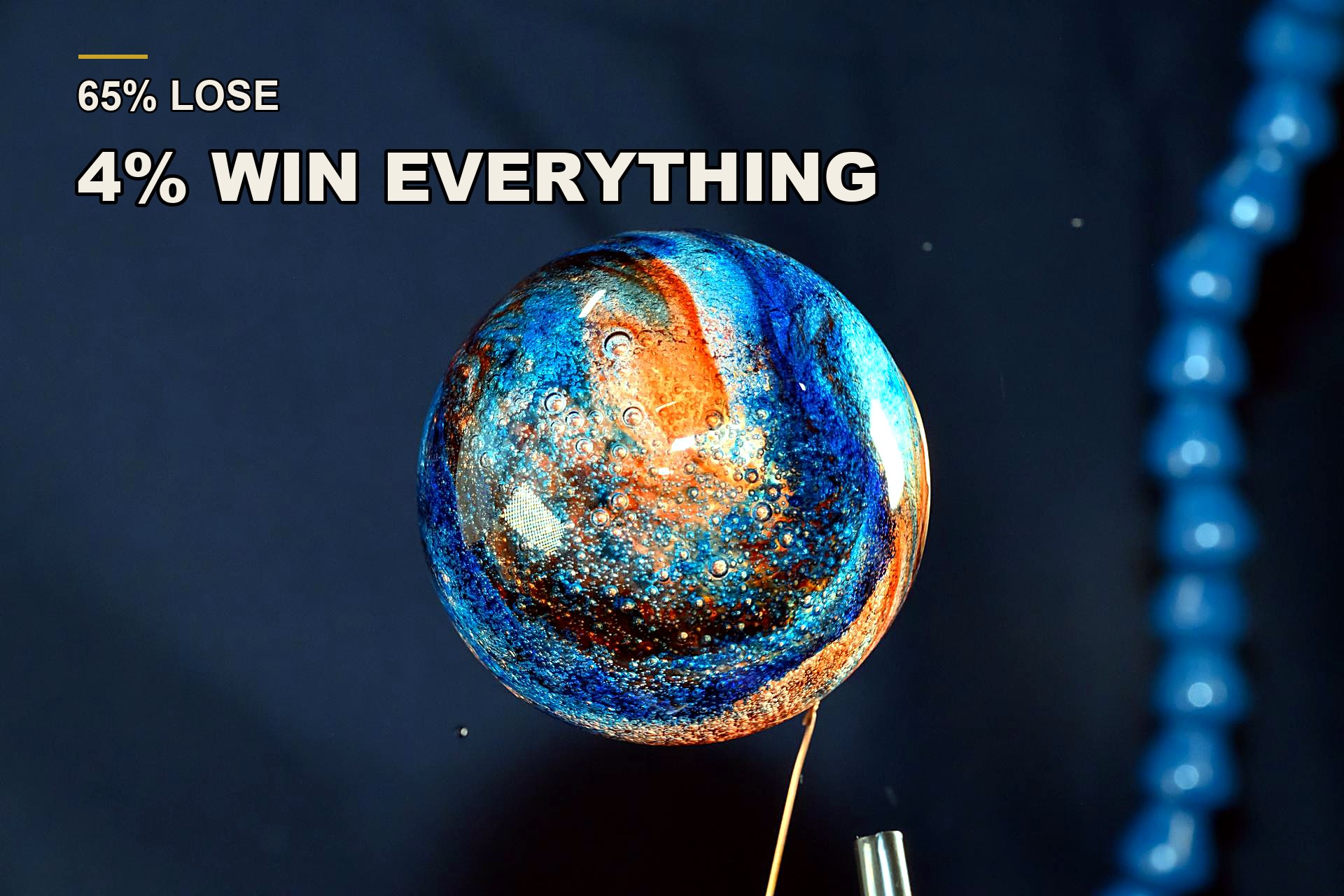
But look at where the outsized results actually come from. Here is a fact about startup investing that sounds like a mistake and is not. Someone studied more than 20,000 startup investments over 10 years. About 65 percent of them returned less money than went in. Most bets lose. Only about 4 in 100 returned 10 times the money or more, and that tiny sliver produced almost all of the total gains.
Read that twice, because it is the whole essay. A good investor is not someone whose bets mostly work. A good investor is someone whose bets mostly fail, while a rare few win so big they carry everything else. The winners are not slightly better versions of the average bet. They are a different kind of thing. A 10x outcome, sometimes 100x, not a bigger version of the average.
Effort sets the floor. It does not set the ceiling.
This is the logic behind a bet like Outlier Space, money going into a capsule that cannot fly for 2 years. Nobody is paying for effort already spent. The outcome they are hoping for, the rare big one, does not come from grinding. It comes from a real edge meeting the right conditions, the way some crystals grow cleaner in orbit than they ever do on the ground.
Hold that next to your own life. Grinding gives you a good average. A solid, above-the-pack, reliable result. It sets your floor, and it raises your floor, year after year, maybe 10 or 20 percent better each time. What it does not do is get you to 10x. The outlier outcome, the one that changes everything, is not sitting at the top of the grind. It is not a harder version of the average. Like the thing that only forms in free fall, it needs a different environment, not a harder push in the same one.
None of this means effort is optional. The people at Outlier Space are not coasting. They are probably working very hard. But the hard work is the entry fee, not the win. It gets you into the game and keeps your floor high. It has never, on its own, carried anyone to 10x. That crossing is a change of environment, not more force in the wrong one.
What the investor does that you can borrow
So what do you do, if the extraordinary thing cannot be forced by effort? You do what the investor does.
An investor cannot make a startup become a giant. They cannot grind on the founder's behalf. What they can do is spot real potential, put honest resources behind it, build the conditions for it to grow, and then, this is the hard part, let it become what it is going to become. They also make their peace with the misses. They know most bets will not pay off, and they do not read each miss as a personal failure. The misses are the structure, not the shame.
Now turn that inward. You are both the investor and the startup. The grind is your startup working hard. The wiser move is to also play the investor for yourself. Notice where your real potential sits. Put honest resources behind it, time, attention, room, rest, the right people, the right conditions. Put in as much effort as actually moves it, and once more effort would add nothing, stop pushing and give it time.
This is not a call to make more bets and grind each one harder. That is still just grinding, spread across more things. The shift runs the other way. Fewer things forced, more things backed with real but sensible effort, then given time instead of more pushing.
And the misses. If a rare 4 in 100 bets carry a whole fund, then most of the things you try that do not work out are not proof you are doing it wrong. They are the cost of having any shot at that 4 percent at all.
One caution though. Each of those bets is a two-way door. Money goes in, and if it fails, the fund walks back out and moves on. Your own life has two-way doors too, the reversible kind you can step back through: a project, a new skill, a side venture. Take your big swings there. But some choices only open one way. Parts of your health. Parts of a marriage. The people who depend on you. You do not take wild swings at a one-way door. (Amazon's founder sorted decisions exactly this way, the reversible ones made fast, the one-way ones made slow.) So take the 10x swings where you can walk back out, and stop carrying every dead two-way bet like a verdict on who you are.
Try this week
Whether you are a founder raising a round or someone trying to shape a life closer to your own vision, look at where you are grinding hardest right now, and ask an honest question. Is this effort raising my floor, or am I quietly hoping that if I just push hard enough, the same push will lift me to 10x?
If it is your floor, good. Keep it up. A high floor is worth a great deal. But if you are secretly waiting for grind to turn into greatness, go looking for the different environment instead. Where is the real potential you have been too busy to resource? What would it look like to fund that, protect it, and give it what it actually needs, instead of trying to force it?
One question to sit with. If working harder can only raise your floor, what is the thing you keep trying to grind into greatness, when what it really needs is a different way to 10x it, or even 100x?
Frequently asked questions
What is Outlier Space?
A New Zealand startup founded in 2024 by Jamie France, a former Rocket Lab engineer. It is building a small reusable capsule that carries payloads to orbit for weeks, where the free fall of orbit lets certain crystals, fibers, and drugs form more cleanly than gravity allows on the ground, then returns them to Earth. It raised $7.35 million (about A$10.5 million) in a pre-seed round in July 2026, led by GD1, and aims to fly its first mission in 2028.
Does this mean hard work does not matter?
No. Hard work matters, it just does a specific job. It raises your floor and keeps it high, which is worth a lot. What it cannot do by itself is carry you into the rare, 10x outcome. That takes a different environment, the right conditions, timing, and something real the world actually wants, not simply more hours.
What is the “power law” investors talk about?
It is the pattern where most bets return little or nothing and a tiny few return almost everything. In one study of more than 20,000 startup investments, about 65 percent returned less than the money put in, and only about 4 percent returned 10 times or more, yet that 4 percent produced most of the gains.
Isn't this just luck or survivorship bias?
Luck and timing are part of it, and pretending otherwise would be dishonest. But the point is not “give up and hope.” It is that you resource potential and create the conditions the way an investor does, and you accept that most bets miss, instead of believing effort alone will force the outlier.
How do I use this if I am not a founder?
The same way. Notice where you are grinding to lift a good result into a great one. Keep the grind that holds your floor, and for the extraordinary thing, back your real potential, protect it, and give it what it needs, rather than trying to push it into being.
This is a companion piece to Reusable Rockets, Disposable Joy, on rebuilding a source of joy you do not throw away one win at a time. If this hit something for you, the Spec Check is 4 questions that take about 60 seconds, a quick way to see where you are grinding on the wrong thing.
Related essays
Your space, free
No matter where you start, it walks with you: find what you really want, and be at peace and in joy on the way. Your unfair advantage.
Make my free account